What is Vaginal Cancer?
Vaginal cancer is a rare type of cancer that starts in the vagina—the muscular tube connecting the external female reproductive organs (vulva) to the cervix, the opening of the uterus. It occurs when abnormal cells in the vaginal tissues grow uncontrollably. Vaginal cancer can be classified as either primary, where the cancer begins in the vagina, or secondary, where cancer from another part of the body, such as the uterus, spreads to the vaginal area.
The most common type of primary vaginal cancer is squamous cell carcinoma, which typically affects women over the age of 50. Another type, adenocarcinoma, is less common but tends to occur in younger women, particularly those under 20 years old. Understanding the types of vaginal cancer and recognizing symptoms early can improve treatment outcomes.
Lorem ipsum dolor sit amet, consectetur adipiscing elit. Fusce sit amet urna quis enim volutpat efficitur. Nam magna velit, bibendum id ullamcorper non, pretium at ante. Duis molestie justo sit amet erat dictum cursus. Ut hendrerit libero vel ornare tempus. Pellentesque vel tortor id sapien dignissim hendrerit. Donec hendrerit libero et augue egestas, vel dictum nibh tempus. Integer ac consequat urna.
Vaginal cancer symptoms
Vaginal cancer often does not cause early symptoms and may be found during a routine Cervical Screening Test.
The following symptoms may indicate vaginal cancer or other vaginal conditions. Please consult a doctor if you experience any of the following:
- Bloody vaginal discharge (unrelated to menstruation)
- Vaginal bleeding after intercourse
- Pain and discomfort in the pelvic area
- Appearance of a lump in the vagina
- Frequent urge to urinate or blood in urine
- Rectal pain
What causes
vaginal cancer?
|
As with many cancers, the exact cause of most vaginal cancers is unknown. However, vaginal cancers have been linked to certain risk factors. Having a risk factor does not mean that you will get cancer, and not having risk factors does not mean that you won’t get cancer. |
|
|---|---|
Risk factors include:
- HPV infection (human papillomavirus) – HPV infections can lead to vaginal cancer if left untreated for a prolonged period.
- Cervical cancer – individuals who have been diagnosed with cervical or pre-cervical cancer in the past are at a higher risk of developing vaginal cancer.
- Radiotherapy treatment – previous radiotherapy treatment to the pelvis can slightly increase the risk of developing vaginal cancer.
About vaginal cancer research
WomenCan is proud to support the Australia New Zealand Gynaecological Oncology Group (ANZGOG), one of Australia’s leading vaginal cancer research foundations. ANZGOG conducts clinical trials to improve and fast track treatments for gynaecological cancer including vaginal cancer, cervical cancer, uterine cancer and ovarian cancer.
Vaginal cancer statistics
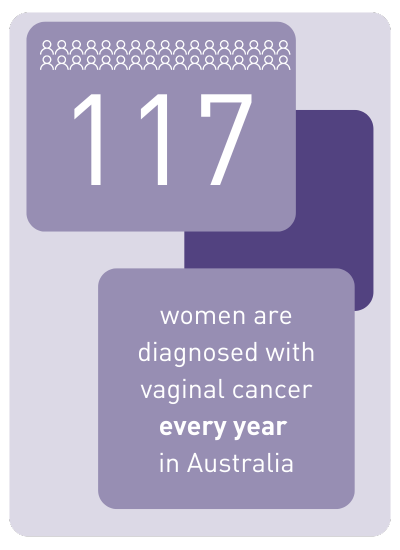
- Approximately 123 Australian women were diagnosed with vaginal cancer in 2021
- Squamous cell cancer primarily affects women over 50 years old, while adenocarcinomas primarily affect women under 20 years old (but occasionally occurs in other age groups)
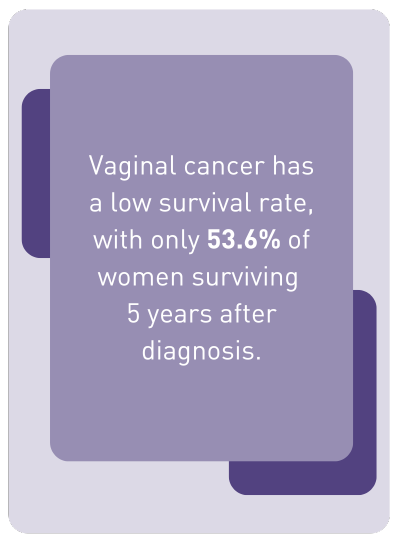
- The five-year survival rate of vaginal cancer is 56%
“I can think of no better way to make a lasting impact on the health and well being of women with cancer than to be an advocate of clinical trials."
Assoc Prof Alison Brand AM, ANZGOG Director
Gynaecological Oncologist
Donate to Vaginal Cancer
Through WomenCan, you can support ANZGOG’s cancer research trials and change the lives of gynaecological cancer patients worldwide.
Donate to ANZGOG's cancer research through WomenCan
Find out more about ANZGOG’s gynaecological cancer trials
SUBSCRIBE TO OUR NEWSLETTER #TogetherWeCan
Stay informed with the latest news on women’s cancer research